
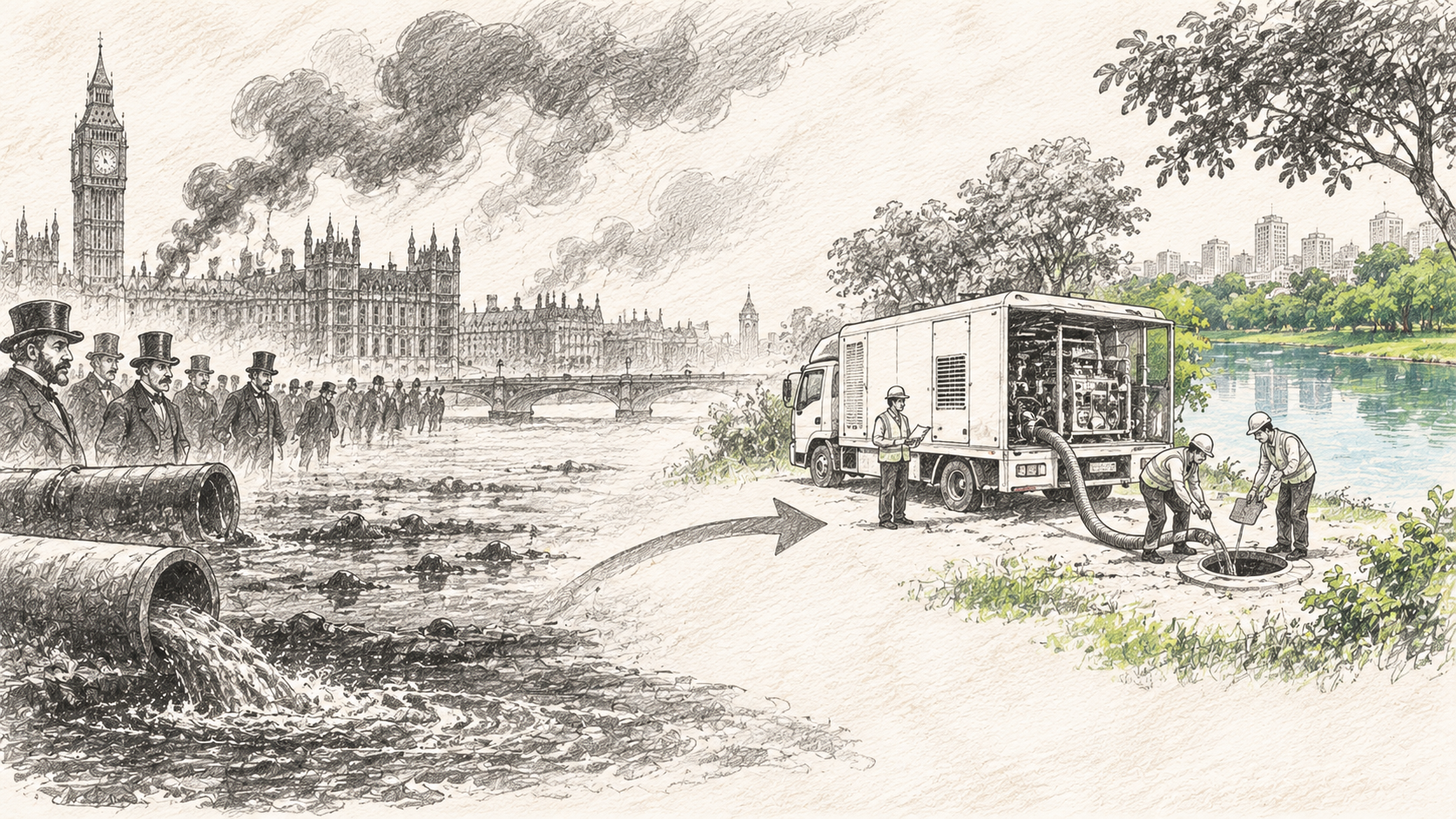
Look at any major city during a boom, and you will see the same pattern: rapid growth, busy factories, and a sudden surge in population. But back in the 19th century, London learned a brutal lesson about what happens when you ignore the basic rules of waste management.
During the height of the Industrial Revolution, London was the undisputed center of global trade. People rushed to the city for work. Factories popped up overnight along the banks of the River Thames.
But there was a dark side to this progress.
Londoners treated their iconic river like an open sewer. Every single day, tons of raw domestic waste, toxic chemicals from factories, and untreated septage were dumped directly into the water. For decades, people simply assumed the river would carry the filth away.
They were wrong. The river didnt clear the waste; it accumulated it.
The turning point came during the scorching summer of 1858, an event historians now call The Great Stink. The heatwave caused the heavily polluted Thames to literally ferment. The stench became so thick and toxic that it brought the entire city to a standstill. Government offices couldnt function, parliament sessions were disrupted, and diseases like cholera swept through the population.
London had to spend millions of pounds and rewrite its entire urban plan just to fix a disaster that could have been prevented.
The Visual Reality of Father Thames
To get a sense of how desperate the situation became, look at how the media at the time reacted. The famous magazine Punch published a biting cartoon illustrating the crisis, showing Death rowing a boat on the murky waters of the river.
This historical image shows Father Thames transformed into a literal waterway of death, perfectly capturing the public anxiety of an era that chose profit over public health.
The Crucial Message for Modern India
As we watch our own cities grow at an extraordinary pace, this piece of history feels incredibly relevant. India is going through its own massive wave of urbanisation and industrial expansion.
We are building faster than ever, but we risk making the exact same mistakes if we dont manage our waste properly. When we see municipal bodies or private tankers illegal dumping septage into local streams, or factories letting untreated effluent slide into our rivers, we are walking down the same path Victorian London did.
Clean water sources are not infinite dumping grounds.
The biggest takeaway from Londons history is that fixing a ruined environment is vastly more expensive and painful than protecting it in the first place. True development isnt just about setting up factories or expanding city borders; it is about building the infrastructure to sustain the human lives within them.
Lets value our water bodies before they force us to listen.
https://www.linkedin.com/pulse/what-170-year-old-british-crisis-teaches-us-indias-future-ramith-raj-azotc/